Free Next Day Delivery Over £20 | Same Day Dispatch

Next-Day Delivery Over £20 | Same Day Dispatch
Free Next Day Delivery Over £20 | Same Day Dispatch
Next-Day Delivery Over £20 | Same Day Dispatch

Disposable vapes may be banned by the government as early as next week over concerns of youth vaping. Health ministers believe that single-use vapes are overwhelmingly targeted at children under 18.
The decision will be revealed in a consultation released by the Department of Health and Social Care next week, says the Daily Telegraph.
Ministers argue that single-use e-cigarettes, sold in bright colours in an array of sweet flavours, are marketed to minors. They believe that disposable vapes are hooking a new generation of kids on nicotine, which is a highly addictive substance.
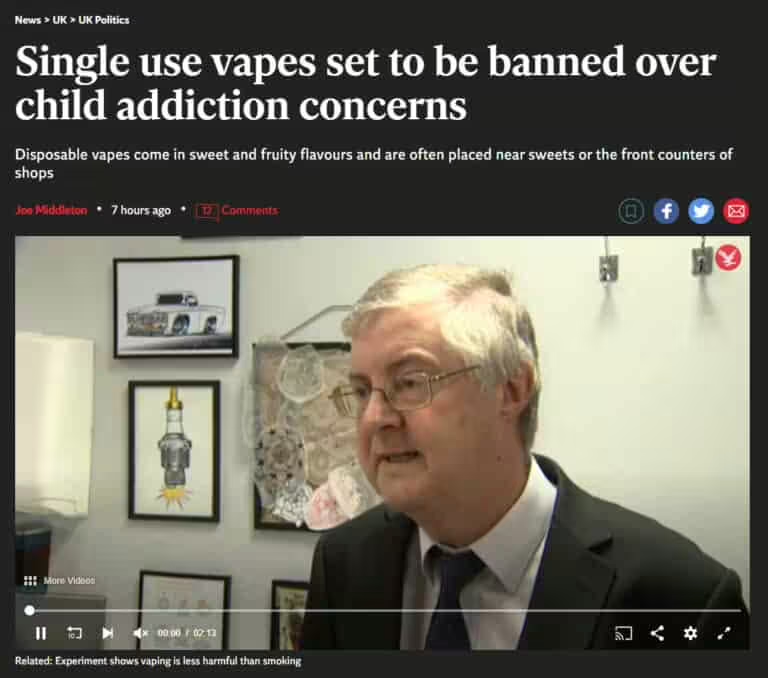
On Tuesday morning’s Sky News program, science minister Michelle Donelan was unable to confirm a ban, but said that the government would make “further announcements.”
She said, “Young children are taking up vaping who have never smoked before and it is extremely dangerous to their health and well-being and it is something we do need to act on.”
It’s been reported that ministers do not intend to go the ill-advised route of Australia by banning all vape products. Instead, they’ll be banning single-use disposable vapes.
This will apply to England only.
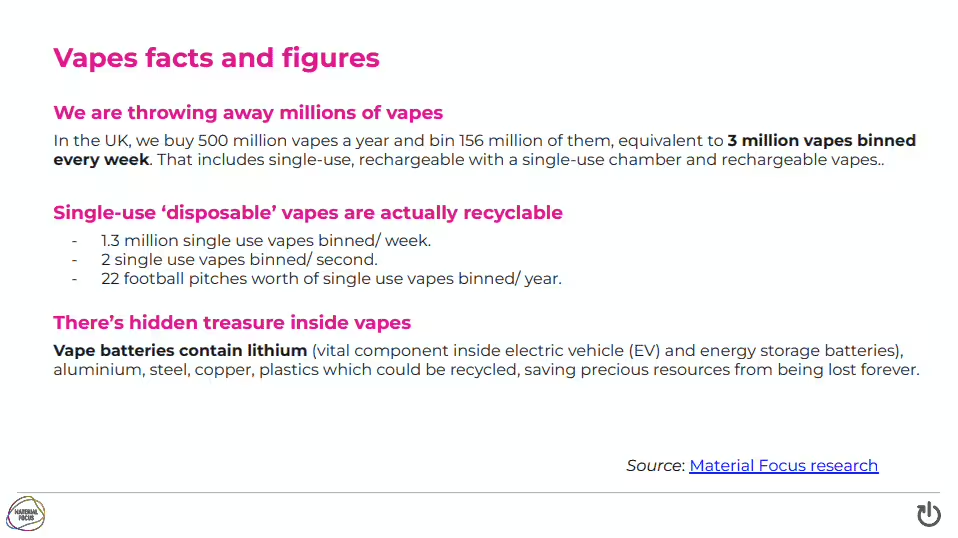
This comes just after research from Material Focus showed that the number of vapes discarded in the UK has risen to three million per week over the past year. The recycling campaign group found that only 17% of consumers correctly recycle their vapes in a shop or local recycling centre.
Still, this disposable vape ban will have massive repercussions on the vape industry and on UK vapers who have come to rely on disposables to quit smoking.
A disposable vape ban will likely be ineffective at curbing youth vaping and may lead to more children taking up smoking. It may also facilitate black market sales of illegally imported disposable vapes.
Where there’s a will, there’s a way. Especially with young people.
Professor Nicole Lee from the National Drug Research Institute at Curtin University says, “Banning or restricting vaping could actually do more harm than good. Banning drugs doesn’t stop people using them. Prohibition does have a number of unintended consequences, including driving drugs underground and creating a black market or increasing harms as people switch to other drugs, which are often more dangerous.”
We saw this happen when Australia banned all vaping products except those obtained with a prescription—black market imports skyrocketed.
The bright colours, the sweet flavours—it’s easy to see why some believe that disposable vapes are targeted toward children. But the majority of users are adult smokers.
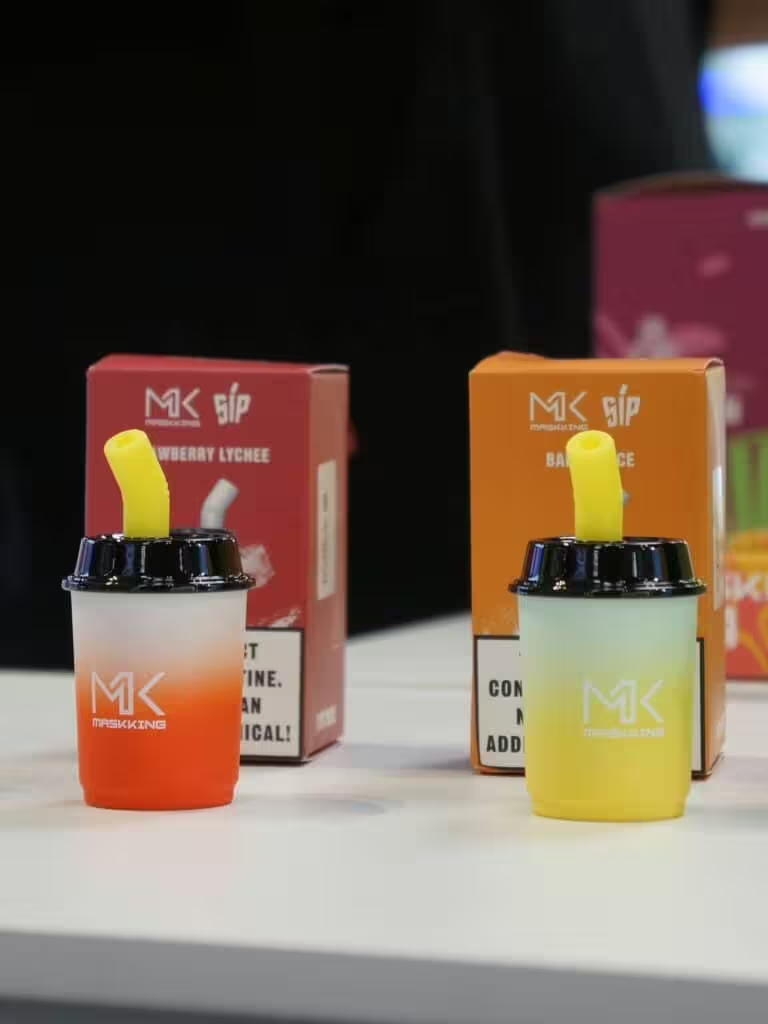
It’s true that some single-use vapes appear to be directly marketed toward young people. Some off-brand disposable vape manufacturers in China export vapes that look like cartoon characters or cutesy everyday objects like ice lollies, watermelon wedges, soda cans, and travel cups.
But you won’t see reputable vape retailers like us stocking these vapes.
In truth, vape flavours are a large part of the appeal for adult smokers making the switch. Removing these products from sale may lead to adult vapers going back to smoking cigarettes. And we know from recent studies that young people don’t typically vape because of the taste.
Dr Colin Mendelsohn argues that banning disposable vapes because of their “kid-friendly” flavours will have little effect on youth vaping while reducing the appeal of vaping to adult smokers, thus increasing smoking rates among adults and possibly even young people.
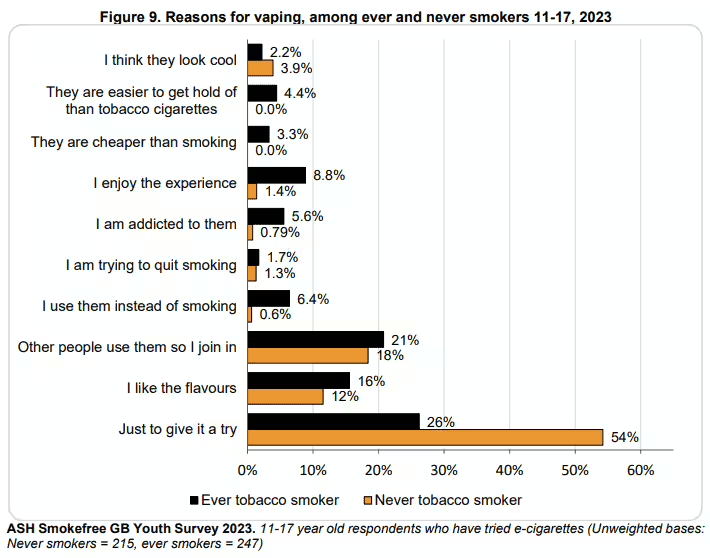
As per ASH’s 2023 Youth Vaping Survey, the number one reason children aged 11-17 gave for vaping is “Just to give it a try." The second biggest reason was that “Other people use them so I join in.”
Only 16% of young tobacco smokers and 12% of never-smokers said they vaped because they liked the flavours.
Furthermore, evidence from a study in San Francisco found that a ban would lead to increased smoking rates in young people, suggesting that vape flavours were actually diverting young people who would’ve otherwise taken up smoking.
In his 2023 review of the use of flavours in tobacco harm reduction, Dr Konstantinos Farsalinos says, “he availability of flavours is key to the experience perceived by smokers and thus facilitates smoking cessation, which will eventually prevent disease and save lives.”
As a responsible online vape retailer, we only sell our products to verified adults. We conduct a one-time age verification on all new customers before they can make a purchase to ensure we’re not selling to anyone under the age of 18.
We see the ecological impact of disposable vapes—they’re not good for the planet—and we also know that they’re falling into the hands of children. Among under-18s, disposable vapes are the e-cigarette of choice. We’re not here to debate these facts.
Any increase in youth vaping should spur a review of the current legislation.
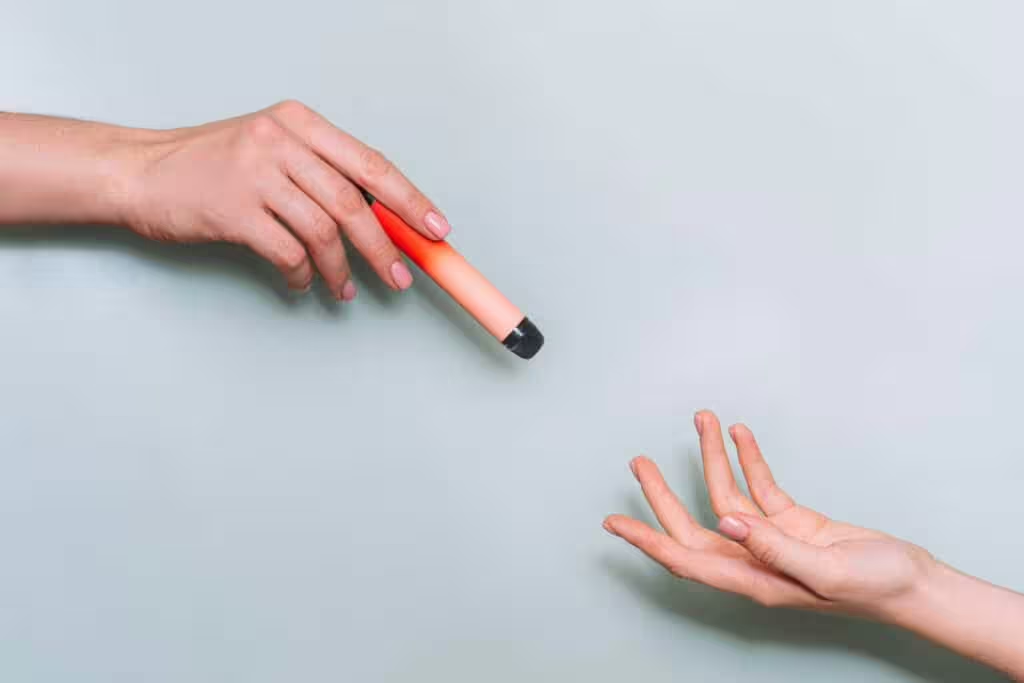
We feel that a disposable vape ban would do more harm than good. The vape industry has proposed a different change to the legislation, but this has fallen on deaf ears.
Here at Vape Green, we see the vast number of seniors who rely on disposable vapes to stay smoke-free, either because refillable vapes create a technological obstacle or because dexterity issues like arthritis make refilling a vape next to impossible.
We also see the massive volume of ex-smokers who managed to switch to vaping because they didn’t have to learn how to operate a vape—they just picked up a disposable and got started. Using a disposable is even easier than lighting up a cigarette, which is one of the reasons why more smokers have switched to vaping in recent years.
Disposables aren’t all good, and they’re not all bad, either. Regular vapers should of course switch to a refillable vape where and when possible to save money and reduce waste—which is why we encourage our customers to find disposable alternatives when they’re ready.
But for many ex-smokers, disposables are the only viable option.
Vapers have proposed a change to the TPD legislation regarding maximum E-Liquid volumes, which would raise the maximum allowed level of E-Liquid in a disposable vape from the current 2ml limit.
This would effectively reduce waste and price young people out of buying them. Countries like the US have disposable vapes with capacities topping 13ml, while the UK has a 2ml limit.
This 2ml limit means that a UK smoker of a pack a day who switches to vaping disposables essentially needs an entire disposable each day to get the same amount of nicotine, which results in a heck of a lot of plastic and battery waste.
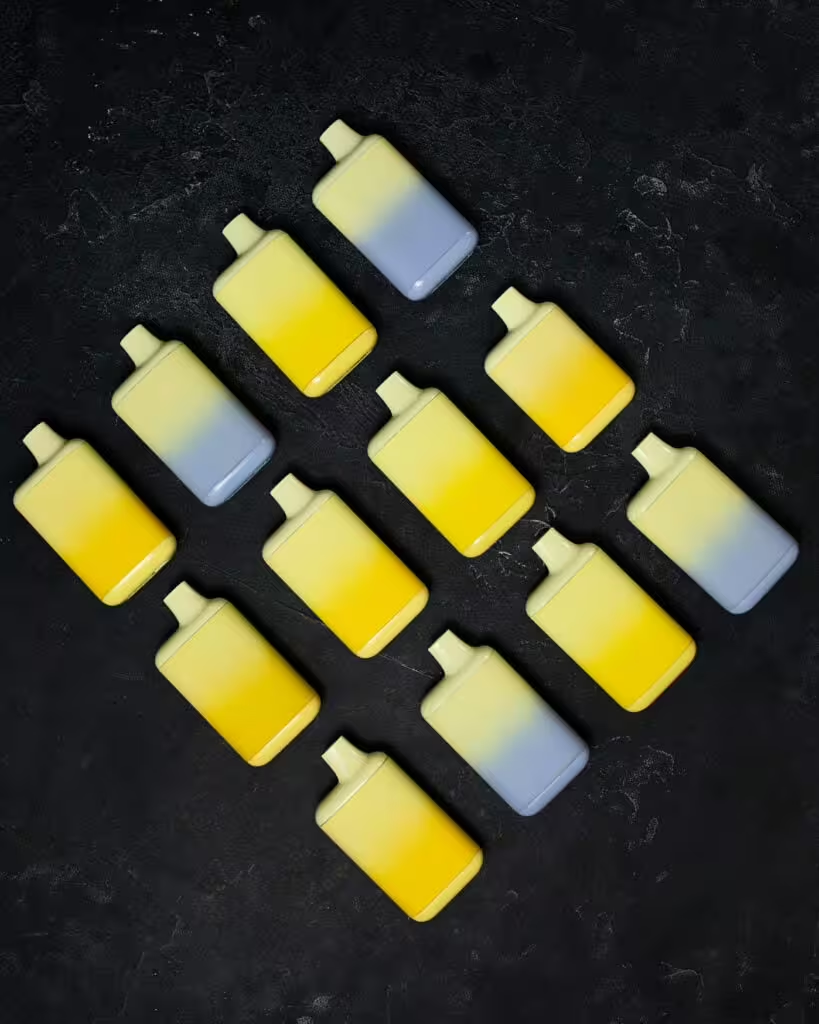
With larger E-Liquid capacities on disposable vapes, less plastic and fewer batteries would be discarded. Plus, if a 2ml disposable vape retails for just £5, a 10ml disposable vape would cost 5 times that amount (£25)—which is more than the average minor carries in pocket money. This would effectively help keep disposable vapes out of the hands of young people.
We know from historical data that when prices go up, use among minors goes down—as was the case with youth smoking in the late 70s onwards. As of now, only 1% of children 11-15 years old are regular smokers, compared to 1982, when that number was around 25% and a pack of 20 cigarettes cost roughly a pound (a £4.52 value today).
Yes, youth vaping is undoubtedly an issue worth addressing. Minors should not be vaping.
In fact, anyone who has never smoked should not be vaping, as it isn’t risk-free if you’ve never smoked.
As it stands, 7.6% of children aged 11-17 vape regularly. This is far too high. And while disposable vapes are the device of choice for 69% of underage vapers, banning them may not curb youth usage.
It may instead lead to more children smoking, as well as a thriving black market of illegal disposable vapes—which is exactly what happened in Australia after their ban.
Above all else, we have to ask ourselves: is it worth banning the world’s most effective smoking cessation aid for a chance at reducing youth usage? Are we willing to risk the lives of the 76,000 adults who die each year from smoking in the UK when we could instead make these devices less accessible to children with a legislation change?
Like it or not, a decision will come from the government as early as next week.
We sincerely hope that the government rethinks this ban for the sake of all of the ex-smokers who wouldn't have been able to make the switch without them—and for all who will return to smoking cigarettes once disposable vapes are out of the picture.

A self-proclaimed American Weird Girl in London, Rachel is a writer with 10 years of vaping experience. In 2021, she severed her decade-long love affair with Marlboro Reds using a pod vape and hasn't looked back since. Armed with degrees in creative writing and media, she's a passionate proponent of THR and helping smokers quit. Outside of writing, Rachel is a multi-instrumental musician, singer, wife, and mother of two black cats.