Free Next Day Delivery Over £20 | Same Day Dispatch

Next-Day Delivery Over £20 | Same Day Dispatch
Free Next Day Delivery Over £20 | Same Day Dispatch
Next-Day Delivery Over £20 | Same Day Dispatch

To legally vape in the UK, one may wonder, “how old do you have to be to vape?”
You must be at least 18 years old. This stringent age requirement is a key measure to protect young people who have never smoked from the addictive properties of nicotine.
In this article, we cover more about the UK’s age restrictions for vaping, the rationale behind them, and the broader context of vaping laws internationally - a must-read for anyone interested in the intricacies of vaping regulations.

In 2015, the UK set the legal vaping age at 18, aligning it with the legal age for purchasing tobacco products. This move sought to protect young people from the potential harms of nicotine. Before this, the age limit for buying tobacco products was raised from 16 to 18 back in October 2007.
This change meant that young people would have to wait until they were 18 to legally purchase vape products such as disposable vapes, refillable vape kits and nicotine free E-Liquid.
The law also prohibited adults from buying these products for anyone under this age, even if they contained no nicotine.
Underage vaping is a concern for several reasons, such as potential health risks and legal consequences. Although the vaping industry is becoming increasingly regulated, issues with underage vaping still persist.
Youth vaping exposes young people to several health risks. One of the most significant is the potential for nicotine addiction, which could lead to future memory and attention problems. This is particularly concerning as underage vaping is often characterized by experimental use, which could still lead to a regular habit, or even worse, a smoking habit.
Nicotine, a highly addictive substance, can disrupt the parts of the adolescent brain responsible for:
It can negatively alter neural pathways, potentially leading to developmental issues related to attention and learning. Additionally, the alteration of synapse formation in the brain due to nicotine can increase the risk of developing addiction to other substances in the future.
Nicotine addiction from a young age could turn out to be deadly later on. As nicotine is most prevalent in cigarettes, young vapers could end up smoking tobacco to get a stronger fix, which fundamentally damages the cells in the body and causes at least 15 different types of cancer.
In this sense, vapes may actually serve as a gateway to something much more harmful, which is the opposite of their intended use.
Hence, even if the intention behind vaping is to quit smoking, it is crucial to be aware of the potential harmful effects of vaping, particularly for young people.
The legal consequences for violating the age restrictions on vaping are severe. Retailers face strict liability offenses for selling vaping products to individuals under the age of 18. Those convicted of such offenses may face further penalties, such as a restricted premises order or a restricted sales order, potentially prohibiting the sale of vaping products for up to a year.
In severe cases, vendors who violate age verification laws may even have their sales license revoked.
Furthermore, adults who purchase vaping products for those under 18 are committing a proxy purchasing offense, which is subject to legal penalties. These laws are in place to ensure the safety and reliability within the vaping industry.
Hence, strict adherence to these laws is imperative for those engaged in the sale of vaping products. The vaping age limit is not merely a guideline but a legal mandate that has significant consequences if violated.
Despite nicotine’s absence in some products, vaping is still regulated for those over the legal age of 18, due to concerns about health risks and addiction.
E-cigarette and E-Liquid regulations in the UK include:
These limitations are in place to reduce the risk of nicotine overdose and to prevent children from accidentally consuming large quantities of nicotine.
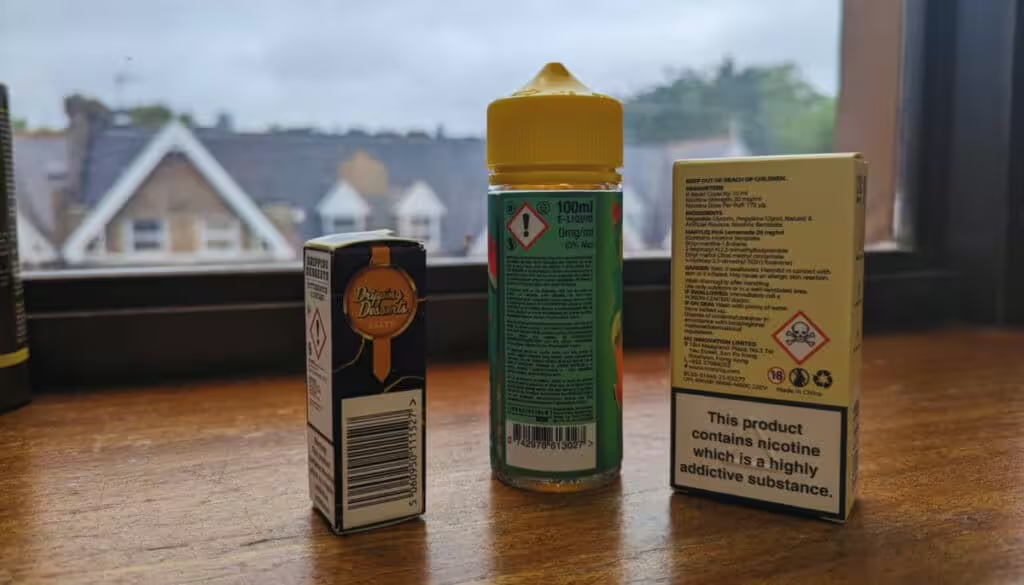
Notwithstanding, vaping, with or without nicotine, is recognized as a far less harmful alternative to smoking and is an effective aid for quitting smoking.
NHS Live Well say that people are twice as likely to quit smoking using e-cigarettes than people who using other nicotine products such as patches or gum.
A report by Kings College London in 2022 found that vaping poses only a fraction of the risks that smoking does, with vaping exposing users to far less toxins than tobacco smoke.
Nonetheless, it’s crucial to understand that this does not imply that vaping is devoid of risk, especially for the youth or non-smokers, and its long-term effects are not fully known.

Confirming the age of customers is a vital procedure in the sale of vaping products. In-store, the Challenge 25 policy is employed, requiring photo identification from individuals who appear under 25. Acceptable forms of ID include a driving license, a Proof of Age Standards (PASS) Card, or a current passport.
Innovative technology is also being used to verify age. For example:
To ensure staff compliance with age verification practices, some retailers conduct secret shopping exercises using over-18 individuals who look young. Compliance with GDPR is ensured by retailers too; biometric data is not kept on record and personal identification documents for online verifications are not stored.
Vaping laws and age restrictions are similar worldwide. Some countries have strict limits, while others have total bans on vaping products. The vaping age minimum in most western countries lies between 18 and 21 year of age.
Countries such as Australia, China, South Korea, and the UAE have also defined the legal vaping age and legal smoking age at 18, with Australia requiring a prescription for nicotine vapes. On the extreme end, nations including Brazil, Singapore, Mexico, Qatar, Cambodia, and Bhutan, along with Turkey, have implemented comprehensive bans or severe restrictions on vaping products.
Brazil and Singapore have longstanding bans on e-cigarettes, while South Korea levies substantial taxes on E-Liquids, especially for imported brands. These varying restrictions reflect the differing perspectives on vaping globally.
Vaping is primarily intended as a tool to assist adults in quitting smoking.
Health practitioners in England and Wales are advised by the National Institute for Health and Care Excellence (NICE) to discuss e-cigarettes with smokers as a cessation aid.
Vaping delivers a similar hand-to-mouth action and throat sensation to smoking, which helps smokers in their quitting process.
Research shows that smokers using nicotine vaping products or heated tobacco products are about twice as likely to quit smoking compared to those who use nicotine replacement products like patches or gum.
Nearly two-thirds of smokers who use a vaping device in combination with support from a local Stop Smoking Service successfully quit smoking.
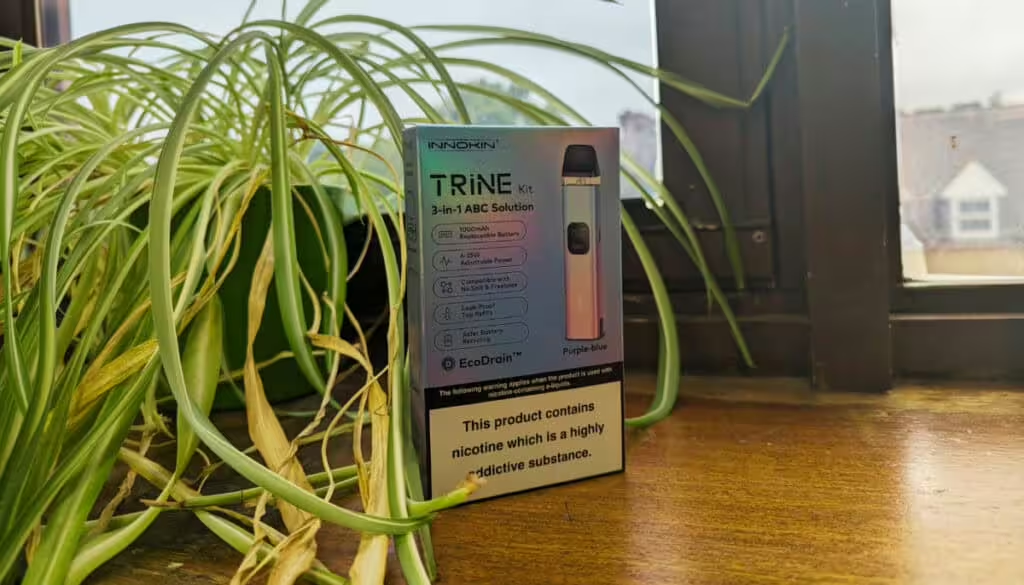
However, vaping is not recommended for individuals who are non-smokers or under the legal age of 18. The focus is on helping current smokers quit, not encouraging non-smokers or young people to start vaping.
Read what happens when you quit smoking and start vaping to understand the benefits, cost savings, and challenges you could face.
Understanding the vaping age requirement is crucial for both consumers and retailers. In the UK, the legal age for vaping is 18, as the risks associated with nicotine use and vaping in young people are too high to ignore. Retailers have a significant role in enforcing these age restrictions, and face severe legal penalties for non-compliance.
Globally, the legal age for vaping varies, with some countries even implementing total bans on vaping products. Despite these differences, a common thread between many vape ideologies is the recognition of the potential harm vaping can cause in young people. Vaping is primarily intended as an adult smoking cessation tool, and its use by non-smokers and those under the legal age should be strongly discouraged.
The age requirement for vaping is more than just a number. It’s a safeguard to protect young people from potential harm and addiction. It’s not just a testament to the vaping industry’s responsibility towards public health, but towards the overarching consumer cultures responsibilities too. Regulation and requirements are an essential aspect of responsible retailing and consumption.
Loading FAQAccordion...
A storyteller till the end, Charlie is a true Londoner with style and writing flair. Carrying a journalism degree under his belt with experience writing for a variety of businesses, Charlie makes sure to hold his words to a high standard everywhere he goes. Although not an out and out vaper himself, Charlie's passion lies in helping smokers quit and move into the electronic age. Other than his journalistic work, Charlie can be found on tennis courts or in boxing gyms around the capital.
The legal age for vaping in the UK is 18.