Free Next Day Delivery Over £20 | Same Day Dispatch

Next-Day Delivery Over £20 | Same Day Dispatch
Free Next Day Delivery Over £20 | Same Day Dispatch
Next-Day Delivery Over £20 | Same Day Dispatch

As of October 2021, the new and very strict shipping regulations set out in the PACT Act are poised to decimate an entire industry. Let’s talk a bit about how this affects vapers here in the UK.
The Preventing All Cigarette Trafficking (PACT Act) was first established in 2019, then was revised and put into law on the 21st of October 2021 to include a clause stating that the USPS, the US’ federal postal service, would no longer allow the shipping of vape kits, E-Liquids, or any other vape products through their service.
After the USPS banned shipping of vape products, most commercial courier services followed suit after pressure from the ATF (Bureau of Alcohol, Tobacco, Firearms and Explosives), who employs a harsh policing agency to enforce the ban.
Not only does this doom an entire industry—and a country full of ex-smokers who need vaping products to continue abstaining from smoking—it’s happening during a pandemic, no less, when everyone is shopping online to avoid potentially deadly contact with the outside world.
It’s also bad news for UK vapers who enjoy their American imported E-Liquids.
You’ve probably noticed that Vape Green’s stock of popular American brands like Kai’s Virgin Vapor and Kind Juice has been affected by the new regulations.
Some of the bigger American E-Liquid brands have managed to move production of their E-Liquids intended for the UK market into the UK by partnering with existing UK E-Liquid manufacturers. But for smaller companies who can’t afford to relocate production, they’re left to find new ways to ship overseas in the wake of the PACT Act and its destruction. For a lot of American companies, this means an end to their international E-Liquid market.
Courier services like FedEx, UPS, and DHL will no longer carry packages containing vaping products into the UK from the US. And while USPS have exemptions to the ban for business-to-business transactions, the process is complicated, expensive, and cumbersome, to say the least. The US has made it impossible for smaller E-Liquid companies to continue operating.
Any vape manufacturer wishing to ship their products via USPS to a retailer must submit a lengthy, insurmountable application, providing the names and addresses of every business they ship to, as well as a list of all of their customers and those customers’ driver’s licenses. If they want to add new customers, or change the address of an existing customer, they must update this on their application and have it approved by USPS before they can ship to the new address.
Crazy, right?
Perhaps the most bizarre rule in all of this is that these distributors must apply to each individual post office that they plan on shipping from, and if approved, they can only ship from that specific branch. Once approved, all packages containing vape products will have to be hand-delivered and processed in a face-to-face transaction with the post office.
On top of all of this, the actual package requires specific forms, which will contain the recipient’s PACT eligibility number, and a load of other bureaucratic obstacles in the way of vapers getting what they need to stay off of cigarettes.

Understandably, the new requirements set out by the PACT Act aren’t practical for any manufacturer shipping a lot of parcels, as it would be impossible to send dozens or hundreds of large packages a day this way. This would require the manufacturer to hire staff to do nothing else but visit the post office daily, queue up, fill out the forms, and send these parcels.
“Unless you’re shipping just two or three packages a day, USPS isn’t going to work. I’d have to physically go into the post office and fill out one of those little green cards for each package,” says Mi-One’s Geoff Habicht. “Nobody will do that.”
This leaves manufacturers and wholesalers in the same boat as online retailers: to stay afloat, they’ll have to create their own private courier network to deliver these parcels, and America is a pretty big place.
The wholesale segment of the vaping industry is fairly accustomed to the world of freight shipping. But with big carriers out of the picture, how will even the savviest wholesalers survive the ban?
The freight industry is a huge collection of national, regional, and local carriers that deliver full truckloads, LTLs (less-than-truckloads), and smaller parcels. Vaping businesses will have to assemble ad hoc networks from existing companies—after assessing shippers’ willingness to carry nicotine and vaping products—and create logistics systems that can manage deliveries between various manufacturers, distribution warehouses, and vape shops.
What a headache.

Needless to say, companies who aren’t blessed with deep pockets will not survive the PACT Act. It will require time and resources for them to re-establish their presence in both the US and the UK.
Of course, this will lead to many online vape retailers having to close their virtual doors to customers, who may return to smoking without the convenience of online vape shopping. After trying the chemical-tasting E-Liquids and horrid knock-off disposables at their local corner store or gas station, many American ex-smokers are bound to return to cigarettes.
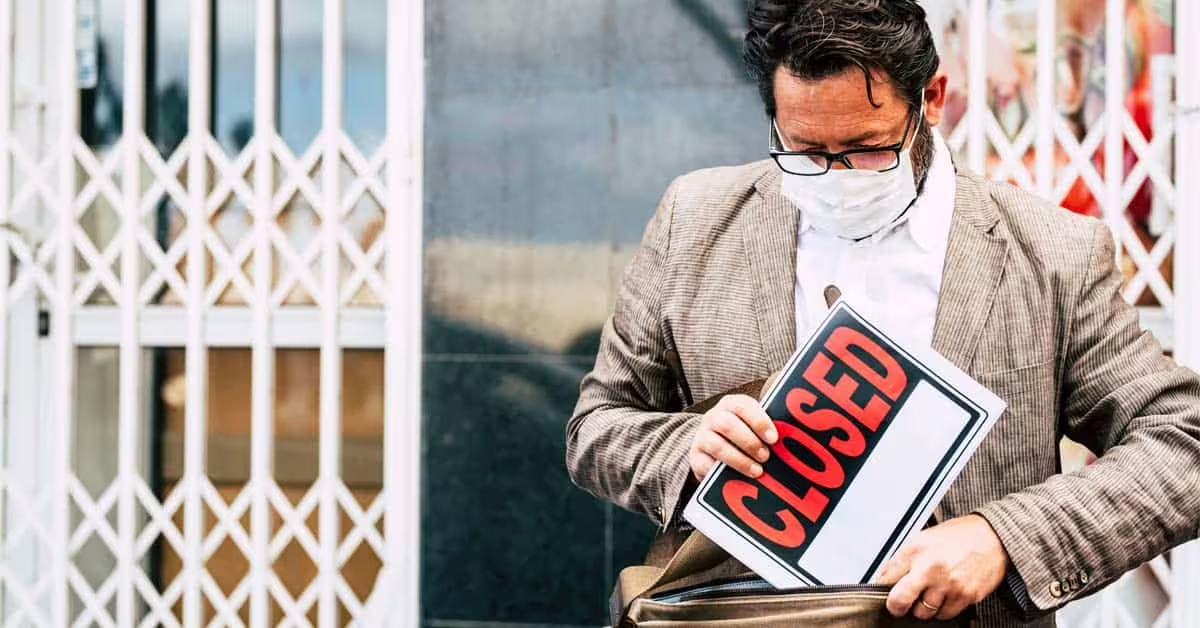
As of 20th September 2021, Kai’s Virgin Vapor has put a notice on their website stating that they will have to close their business after 11 hard-earned years in the industry due to the new regulations set out by the PACT Act.
You can read their article here.
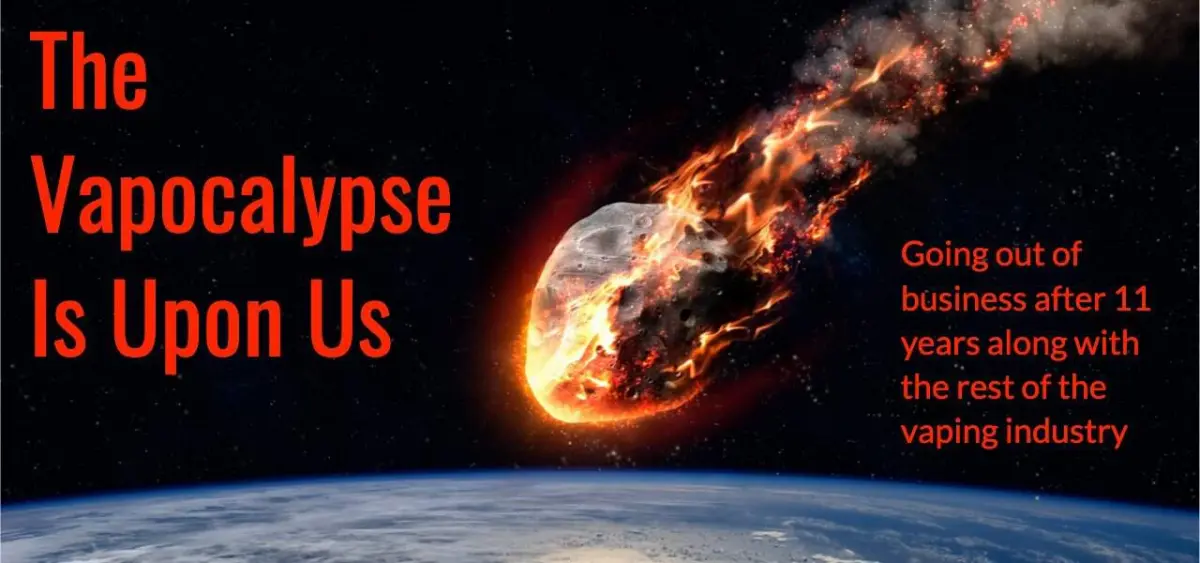
We’re so pleased to report that despite the vape mail ban and the fallout of the PACT Act, our American friends at Kai’s Virgin Vapor have survived and continue to ship in the US. They’ve devised strategies for shipping inside the US, and while shipping costs may be higher, it’s the price consumers will have to pay to purchase their vape products online.
While we’re still unable to import E-Liquids from both Kai’s Virgin Vapor and Kind Juice, we’re happy to see that they continue to produce in the US.

A self-proclaimed American Weird Girl in London, Rachel is a writer with 10 years of vaping experience. In 2021, she severed her decade-long love affair with Marlboro Reds using a pod vape and hasn't looked back since. Armed with degrees in creative writing and media, she's a passionate proponent of THR and helping smokers quit. Outside of writing, Rachel is a multi-instrumental musician, singer, wife, and mother of two black cats.