Free Next Day Delivery Over £20 | Same Day Dispatch

Next-Day Delivery Over £20 | Same Day Dispatch
Free Next Day Delivery Over £20 | Same Day Dispatch
Next-Day Delivery Over £20 | Same Day Dispatch

Last year saw the advent of more eco-friendly vapes and disposable companies pumping out E-Liquid versions of their most popular disposable vapes. What does have in store for vapers?
Vaping is a vast, ever-evolving landscape. An industry born in spite of Big Tobacco—created by ex-smokers for ex-smokers —is bound to shatter the glass ceiling, as it were.
Let’s take a look at some of our predictions for what might bring to the vaping industry.
The number one vaping trend we’re expecting to see this year is more alternatives to disposable vapes. With the impending ban on disposable vapes here in the UK, the vape industry is sure to see an influx of vape kits designed with displaced disposable vapers in mind.
We expect to see a number of closed pod kits emerge this year from all of the most popular vaping brands, all designed to accommodate the growing number of vapers switching away from single-use disposable vapes.
Closed pod kits utilise prefilled vape pods, which come pre-filled and ready to use.
These disposable pods are ideal for those switching away from disposables, since they’re cheaper and better for the planet in the long run without adding any extra maintenance aside from the occasional recharge.
We expect to see a number of crafty workarounds for the upcoming disposable vape ban, whether that’s more rechargeable disposable vapes like the Zap! Instafill, or more hardware companies creating prefilled pods for existing vape kits, like OXVA did with their OXVA Xlim prefilled pods.
Whatever the government throws at us, vapers will find a way. We found a way when TPD and TRPR were introduced—this disposable vape ban is no different.
Last year, we predicted that more eco-friendly disposable vapes would be entering the market. And while this did happen—particularly with disposable vape brands like the Slix Bar—we’re expecting to see even more focus on planet-friendly vapes in this year’s vaping trends.
Given the focus on the ecological impact of disposable vapes, the industry is in the spotlight right now. Material Focus has found that millions of vapes are being sent to landfill each week, and vaping is the source of a large portion of e-waste at the moment.
The idea now is to find and fund greener methods for recycling and to ensure that every vaper takes part. This, paired with more eco-conscious vape hardware innovations like the modular design of the Elf Bar 600 V2—which allows for the battery to be removed for recycling and uses a recyclable metallic body instead of plastic—will be the defining moment for the UK vaping industry in .
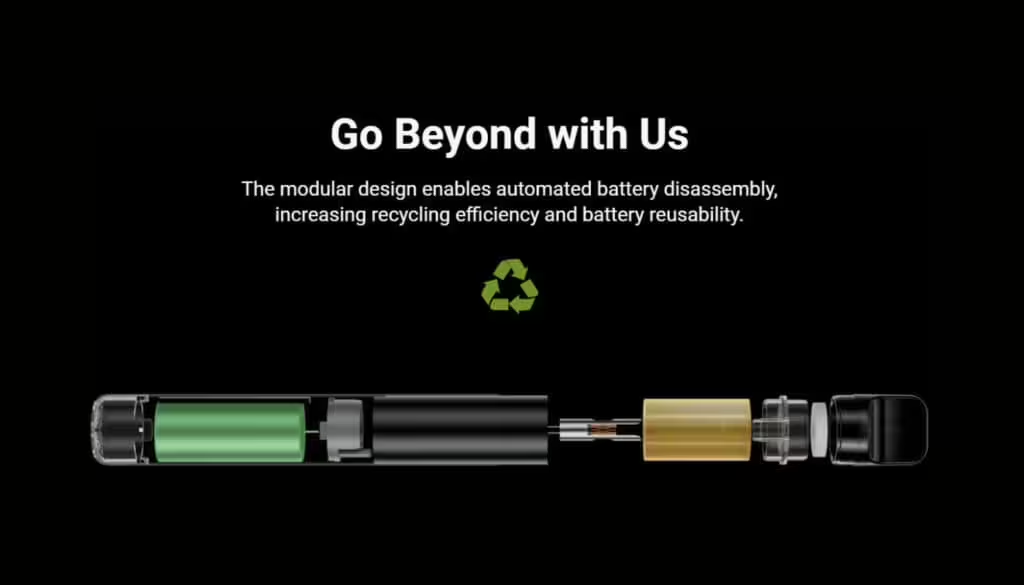
Interestingly, there’s already an eco-friendly solution for vapers looking to help the planet: mods that use external batteries. These have been around longer than anything else on the market, and their external vape batteries ensure recyclability and an everlasting device. The mod is essentially a skeleton that can keep being used indefinitely, so long as the external batteries are replaced every year.
For vapes with built-in batteries—which includes most pod vapes and cheap vape kits—what you’re buying is essentially semi-disposable. These vapes, while convenient and easy to use, are destined to need replacing every 6 to 12 months due to the fact that their batteries cannot be replaced.
We’d love to see an eco-friendly solution for these more user-friendly devices allowing users to remove, recycle, and replace their batteries. So few vapers use mods with replaceable batteries, so this would help cut e-waste and would mean MTL vapers could hang onto their favourite pod kit for longer.
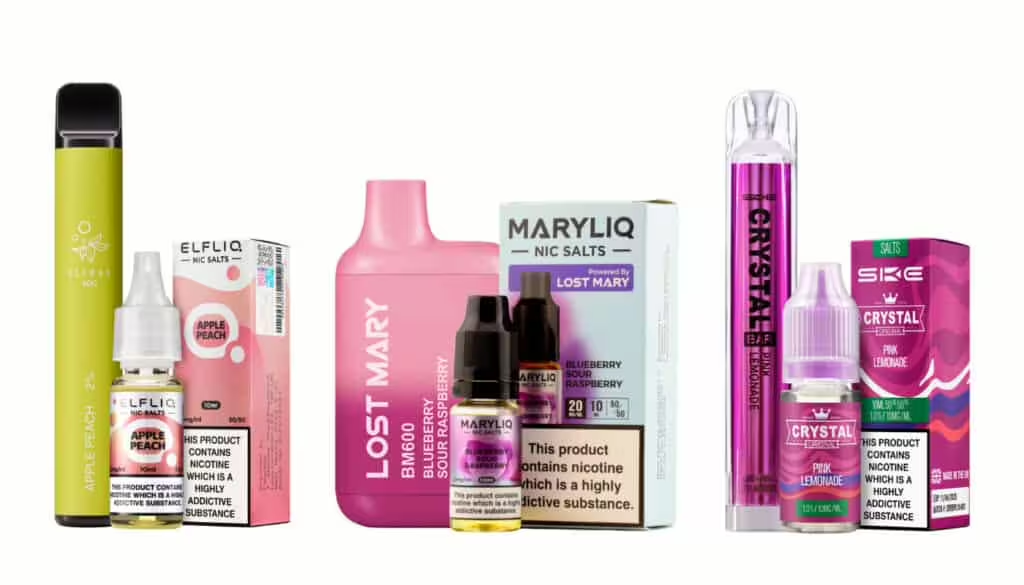
We predicted this last year (and we were right), but for this year’s vaping trends, we’re expecting a full-force takeover of the nic salt. Last year, popular disposable vape brands like Lost Mary and SKE Crystal Bar released their very own nic salts flavoured exactly like their disposable vapes, and vapers went nuts for them.
I’m one of those vapers, currently using the Pineapple Ice Lost Mary nic salt.
Disposable vape E-Liquids are ultra sweet and highly concentrated—a far cry from the popular vape flavours of old (circa 2022). Vapers are increasingly favouring these ultra-flavourful juices, with some unable to vape anything else. As much as I love a classic UK-made flavour, many of them simply don’t deliver the level of flavour we’ve come to expect after disposable vapes changed the game.
Plus, coil technology has come a long way as of late—a level of sweetener that once would’ve ruined a coil in hours can now be vaped for weeks without causing any issues. It used to be the case that sweeter E-Liquid meant much shorter coil life, and while this is still true, hardware companies are now producing coils capable of handling the demands of these sweeter E-Liquids.
We’ve got disposable E-Liquids now from all of the major disposable manufacturers—who, notably, are mostly from outside of the UK—but this year, we’re expecting something else: a full-scale evolution of the nic salt market.
We’re likely to see UK E-Liquid brands reformulating their juices to meet the demands of flavour-hungry vapers, replacing old flavours with double or triple concentrated versions with extra sweetener to sate vapers’ appetites.
This will be a welcome change for many who once loved a flavour that they now find too mild or muted.
Still, there are many vapers who never fell under the spell of disposable vapes—who don’t appreciate a level of sweetness that sets your teeth on edge. I suspect these vapers will soon be finding it difficult to source E-Liquids with their preferred level of flavour or sweetness.
It’s all about the tech and AI this year, and we expect these elements will be majorly influencing vaping trends on the market this year. Smart vape kits, able to connect to your smartphone, could provide usage insights, child locks, and settings options without the user having to navigate a tiny menu.
This could be great for vapers looking to monitor their nicotine intake and for those with children who need an extra failsafe to ensure their vapes don’t fall into their kids’ hands.
And there’s a chance that AI could break into vaping as well, allowing for personalised adjustments to settings like wattage, airflow, and temperature control to ensure your vape is always tailored for you.
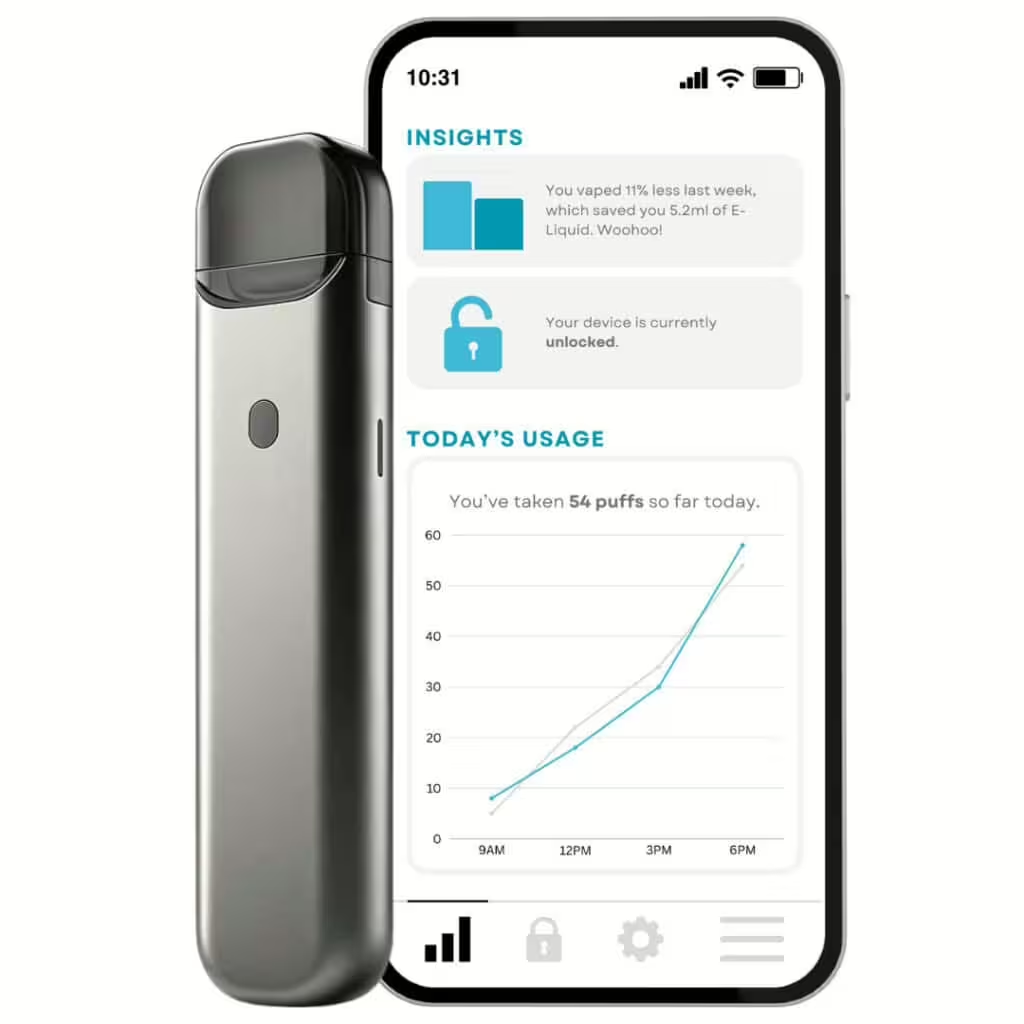
JUUL has already come out with a smart device—the JUUL2—which helps you track your vape if you lose it, get insights into your usage, and auto-lock the vape to ensure it doesn’t fall into the wrong hands.
We expect to see more of these smart devices entering the market this year, with an emphasis on safety and youth prevention. Given that just about everyone has a smartphone glued to their side, and seeing how many people already utilise a network of smart home devices, the next logical step would be to integrate vaping into this smart web.
I suspect that this year will be the death of the tiny vape battery—hopefully. There’s really no excuse nowadays for a refillable pod kit to have a 520mAh battery (Uwell Caliburn, I’m looking at you), especially if you’re charging more than £10 for the device.
With batteries becoming cheaper and more compact, and with 2A USB-C charging becoming more prevalent in the industry, we’re looking forward to seeing larger batteries with better charging time in more affordable devices. The GeekVape Sonder U, for instance, houses a 1000mAh battery despite only costing £9.99.
And if any more hardware companies come out with £25 pod kits with a capacity under 1000mAh, I think they’re going to be buried this year.
It seems like Uwell is learning this too. All of the earlier iterations of their world-famous Uwell Caliburn series of vapes housed a measly 520mAh battery, and that was the main snag for vapers: it had about as much battery as a disposable.
They’ve been slowly amping up the battery capacities of their vapes over time, though to this day, the largest battery you’ll find in a Caliburn is still only 1000mAh (the Caliburn Explorer).
Meanwhile, companies like OXVA and Aspire are coming out with some great, high-capacity vapes, like the OXVA Oneo with its whopping 1600mAh battery and 2A fast charging, and the Aspire Gotek Pro, which has a 1500mAh battery (though the device is slow to charge).
We sorely hope to see more high-capacity, fast-charging vape kits this year. And frankly, I think it’s probably inevitable for the industry.
So, these are our predictions for the vape industry in . Last year, our predictions were all spot on.
This year, the vape industry will certainly see a lot of change, particularly in the realm of disposable vapes. We also expect to see plenty of innovation in vaping tech this year.
We hope that brings more smokers to the world of vaping and that the number of vapers globally continues to grow. As always, we’re here if you have any questions or need personalised vaping advice. Contact us via email or live chat to get help from one of our expert team members.

A self-proclaimed American Weird Girl in London, Rachel is a writer with 10 years of vaping experience. In 2021, she severed her decade-long love affair with Marlboro Reds using a pod vape and hasn't looked back since. Armed with degrees in creative writing and media, she's a passionate proponent of THR and helping smokers quit. Outside of writing, Rachel is a multi-instrumental musician, singer, wife, and mother of two black cats.